Eight in Ten Felt Better After Ditching Tampons (with Kim Rosas)
For years, women who traded tampons for menstrual cups and discs have said their periods got better. Less cramping, less bloating, fewer headaches. Saalt heard it thousands of times, so they funded an independent consumer study to find out if it held up. The answer surprised even them.
In this episode of The Saalt Show, guest host Kim Rosas of Period Nirvana puts co-founders Cherie and Jon Hoeger in the hot seat. A self-described skeptic of brand-funded studies, Kim walks through the study, funded by Saalt and administered by People Science, and what it found: eight in ten felt better, 95% would recommend the switch, and people were six times more likely to report zero cramping when using a cup or disc.* They get into why the team brought in an outside firm and a PhD researcher, the UC Berkeley tampon study that put heavy metals in the headlines, and the biggest surprise of all, that fewer than one in ten people found a cup or disc hard to use.
Be first to hear The Saalt Show when it launches by signing up at saaltshow.com.
* Individual results vary. In a study of 188 participants tracking 3 cycles, 24% of users reported zero cramping with Saalt vs. 4% at baseline. Saalt products are not intended to diagnose, treat, cure, or prevent any medical condition. Study conducted by People Science capturing self-reported experiences.
Follow or Subscribe to The Saalt Show on your favorite platforms
The Saalt Show: Website | Instagram | X | Pinterest |
Saalt: Website
Cherie Hoeger: Instagram | LinkedIn
Jon Hoeger: LinkedIn
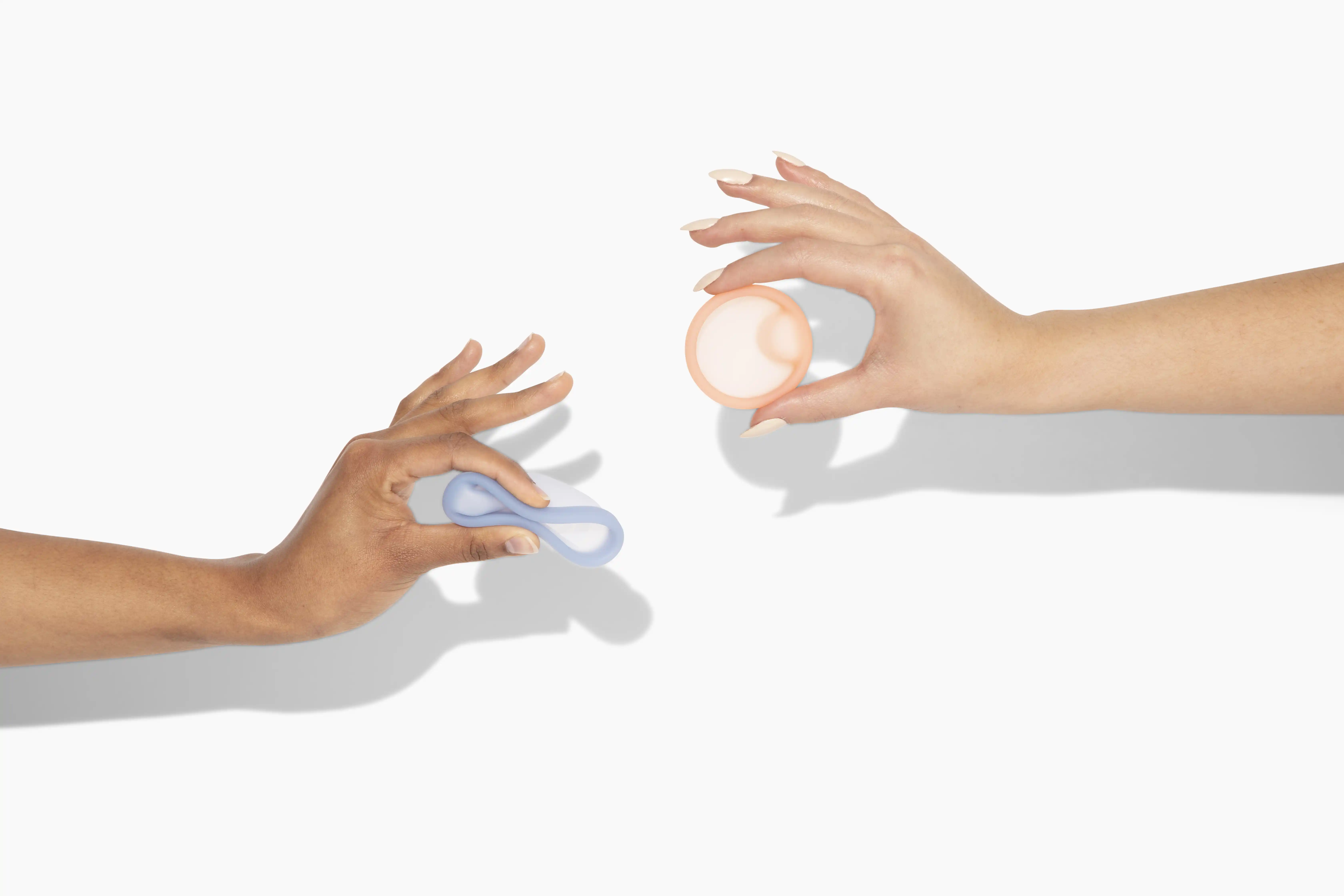
What a New Study Found When Women Switched From Tampons to Reusable Cups and Discs
For years, people who traded tampons for menstrual cups and discs have said the same thing: my cramps eased, my periods got shorter, and I just feel better. It was always anecdotal, the kind of thing you read in reviews but could never point to as proof. A new consumer study funded by Saalt and administered by People Science set out to change that.
In this episode of The Saalt Show, guest host Kim Rosas of Period Nirvana sits down with Cherie and Jon Hoeger, the team behind Saalt. A self-described skeptic of brand-funded studies, Kim walks through what the study found, why the team partnered with an outside research firm, and what the numbers mean for anyone thinking about making the switch.
Table of contents: What you will get · Quick answer · Why Saalt funded the study · How the study was designed · What the study found · The cramping number that stood out · Easier to use than people expect · Do periods get shorter and lighter? · The tampon study that started the conversation · Common reasons people hesitate to try cups and discs · A simple 5-step plan to switch to reusable period care · FAQ · What the study means for you
What you will get
What the study found when participants traded tampons for cups and discs
How reports of better periods, less cramping, and fewer headaches showed up in the data
A simple plan for trying a cup, disc, or leakproof underwear with less guesswork
Quick answer
Saalt recently funded an independent consumer study administered by People Science that asked if users report an improvement in period symptoms when using menstrual cups and discs compared with tampons. Eight in ten reported feeling better, and the study found statistically significant improvements in self-reported symptoms, including reduced cramping, fatigue, bloating, and headaches. People were six times more likely to report zero cramping when using a cup or disc,* and 95% said they would recommend the switch. It is not a clinical trial, but it puts real numbers behind what users have reported for years.
Why Saalt funded the study
It started with Cherie Hoeger's own period. When she switched to a menstrual cup, her cramping eased and her period dropped to about four and a half days, down from six. Over the next eight years, thousands of customers said similar things inside Saalt's community of 25,000 members. Jon Hoeger, who came to period care as a dad of five girls, watched the reviews pile up. The team kept hearing that cups and discs eased cramps, but they could not make that claim without data. So they decided to test it.
How the study was designed
Saalt did not run the study in-house. They brought in Dr. Marybeth Griffin, who holds a PhD in public health from NYU and researches women's health, to design it. They partnered with an external firm, People Science, to recruit participants and run the survey on its platform, so the data collection and analysis were handled entirely by the independent scientific team. It is a consumer study, not a clinical trial, which means people self-reported their symptoms while living their normal lives. As Cherie put it, that meant real people with real periods in the real setting. The study enrolled 246 people, and 188 finished all three cycles: one month on their usual product as a baseline, then two months on a cup or disc.
What the study found
The headline number is the one that travels: about eight in ten people said their periods improved after switching to a cup or disc. In the study's data, 78% reported improved symptoms overall, and another 19.7% said it was about the same, so nearly everyone was the same or better. Study participants also reported that tampons leaked about 30% of the time. And 95% of participants said they would recommend Saalt to a friend, a share even higher than the group who reported an improvement. That high recommendation rate may be due to cups and discs offering perks like saving money and avoiding chemicals.
The cramping number that stood out
Cramping is where the data got striking. Only 4% of participants reported zero cramping while using tampons. On cups and discs, that jumped to 24%. That is six times more likely to report no cramping at all.* The study was designed to measure what users experienced, not why, so it would be great to see future academic research explore deeper. Some users wonder why they experience less cramping when wearing cups or discs. One idea is that a tampon sits against the cervix and absorbs the flow, while a cup or disc collects it and lets the flow move freely. Another is that tampons can feel rigid and take up space, which may add to cramping. Those are hypotheses, not conclusions, and the team is the first to say so.
Easier to use than people expect
The biggest surprise was about the learning curve. The number one fear people have is that a cup or disc will be hard to use. Out of all study participants, fewer than 10% said it was actually hard. That tracks with something retailers see all the time: the loudest voices are usually the small group that struggled, not the majority who figured it out. The study also found a shorter learning curve than people expect.
Do periods get shorter and lighter?
This part was not in the study, so treat it as a hunch. Years ago, a Vice reporter asked Kim Rosas if cups and discs make periods shorter. With no research to point to, she polled her Facebook group, and out of about 1,400 people, 53% said their periods got shorter or lighter. Cherie has seen a similar pattern in her own experience and in customer feedback. Nobody has proven it yet, which is exactly the kind of question the team hopes researchers will pick up.
The tampon study that started the conversation
In July 2024, a UC Berkeley-led study tested 14 tampon brands for 16 metals and found measurable levels of all 16, including lead in every tampon. It got a lot of attention and left people with a hard question: are these safe, and what should I use instead? Saalt funded its consumer health study to provide transparent, real-world data to help people make an informed choice about alternative period products. Tampon manufacturing has drawn scrutiny over the years, too. Older bleaching methods raised concerns about trace byproducts such as dioxin, though modern chlorine-free processing has largely addressed these concerns, and regulators consider any residual levels negligible. The broader questions about what goes into period products are still part of why more people are looking at reusables.
Common reasons people hesitate to try cups and discs
It seems hard to use. This is the top fear, but fewer than 10% of participants thought a cup or disc was actually hard to use.
It looks too big. A disc folds down smaller than it looks, and a cup also folds for insertion. The size question is the most common one Saalt hears, and it fades with practice.
I am worried it will leak in public. Leaking is a common fear, but the data tells a different story. In the study, users reported leaks when wearing tampons about 30% of the time, and a lower leak frequency of 10 to 30% across their cycles while using a cup or disc.
It feels like a fringe product. While reusables are newer, millions of people are making the switch. With traditional tampon prices increasing by an average of 36% since 2019, younger, budget-conscious consumers are turning to reusables. Since a medical-grade silicone cup or disc can last up to 10 years, it is a smart economic shift that aligns with modern environmental values.
A simple 5-step plan to switch to reusable period care
Step 1: Pick your starting product. A firmer cup is a solid first cup, a high-capacity disc suits heavier flows, and leakproof underwear is the easiest place to begin.
Step 2: Treat your first two or three cycles as practice, not a pass-or-fail test.
Step 3: Practice insertion and removal at home before your first day out.
Step 4: Keep a backup, like one cup in your bag and one at home, so you are never caught out.
Step 5: Ask questions in a community. Other users have answered almost everything you will run into.
FAQ
What was this consumer research study? Saalt commissioned an independent consumer health study, administered by People Science, to examine how switching from tampons to reusable cups and discs affects user-reported period symptoms. The study enrolled 246 individuals, with 188 completing all three full menstrual cycles to track daily symptom changes and product performance.
Do menstrual cups really reduce cramps? The study was designed to track what users experienced, not the biological cause behind it, so this study alone can't prove that cups directly reduce cramps. However, when examining user-reported symptoms, the study found a significant shift in comfort. Users were six times more likely to report no cramping at all after using a Saalt cup or disc for two cycles, with the share of participants reporting zero cramps rising from 4% at baseline to 24%.*
Are cups and discs hard to use? Most people expect them to be, but fewer than 10% of study participants found a cup or disc hard to use, and the learning curve eases with practice.
Is the study a clinical trial? No. It is a consumer study in which people self-reported their symptoms at home, designed by a PhD researcher and run by an external firm.
Will a cup or disc make my period shorter? Shorter periods were not a finding directly measured in the study. While some users note subjective changes, this research focused on comfort and symptom prevalence. Hopefully, future research will continue to reveal more.
What the study means for you
The study does not claim to have all the answers. The team walked away with a hundred new questions and hopes universities and doctors will pick them up. What it does offer is real data to back up something women have said for years: cups and discs are associated with user-reported improvements in cramping, fatigue, bloating, and headaches, a better overall period, and are easier to use than most people expect. If this resonates, listen to the full conversation on Episode 2 of The Saalt Show at saaltshow.com when it drops.
Key takeaways
Switching to reusable period care is associated with more than just less cramping. Participants in the study also reported experiencing less fatigue, less bloating, and fewer headaches.
The study linked cup and disc use to a lower user-reported symptom prevalence. Participants were six times more likely to report no cramping at all after using the cup or disc for two cycles, 24% versus 4% at baseline.*
Do not assume a cup or disc is hard to use. Of the 246 participants in the study, fewer than 10% found it hard.
Give yourself two or three cycles to find your fit. The learning curve doesn't have to be long, especially if you stick with it.
Look for third-party validation in research. The study, funded by Saalt, was independently administered by People Science, with academic oversight by a public health PhD consultant.
Save money by switching. The average person spends about $120 a year on period products, and a cup can last around 10 years.
Use a cup to measure your flow. You can quantify your bleeding in milliliters, which helps if you need to show a doctor.
Look at discs for heavier or postpartum periods. A disc holds about six times a tampon and can suit weaker pelvic floors.
Remember, the study is a starting point. The team came away with a hundred new questions and hopes that other researchers dig in.
#TheSaaltShow #PeriodStudy #PeriodCare #MenstrualCup #MenstrualDisc #PeriodCramps #WomensHealth #PeriodPositive #SustainablePeriod #ReusablePeriodCare #ConsumerStudy #CycleHealth
Follow or Subscribe to The Saalt Show on your favorite platforms
The Saalt Show: Website | Instagram | X | Pinterest |
Saalt: Website
Cherie Hoeger: Instagram | LinkedIn
Jon Hoeger: LinkedIn
Kim Rosas (Guest Host): Website | Instagram
* Individual results vary. In a study of 188 participants who tracked 3 cycles, 24% of users reported zero cramping with Saalt, compared with 4% at baseline. Saalt products are not intended to diagnose, treat, cure, or prevent any medical condition. The study conducted by People Science captured self-reported experiences.